In Northern Virginia, not all stinging insects are created equal. When homeowners call us about “giant bees,” they are usually dealing with one of two distinct species of hornets. Understanding the most common hornets in Virginia is the first step in identifying the risk and choosing the correct removal process.
1. The Bald-Faced Hornet (The Aerial Aggressor)
Commonly found in Fairfax and Loudoun counties, these hornets are technically a species of “aerial yellow jacket” and are one of the most frequently encountered hornets in Virginia neighborhoods.
Appearance: Distinctive black body with white or ivory markings on their face. They are about 0.75 inches long—larger than a standard yellow jacket but smaller than a true hornet.
The Nest: They build the classic “football-shaped” grey paper nest, usually hanging from tree branches or eaves. A mature nest can reach the size of a basketball and house up to 400 workers.
Behavior: They are famously aggressive and will “dive-bomb” anyone who gets within a few feet of their nest. Unlike bees, they can sting repeatedly.
2. The European Hornet (The Night-Flying Giant)
This is the only “true” hornet in North America and can be quite intimidating due to its size (up to 1.5 inches). While less common, this species still accounts for a significant portion of hornet sightings in Virginia.
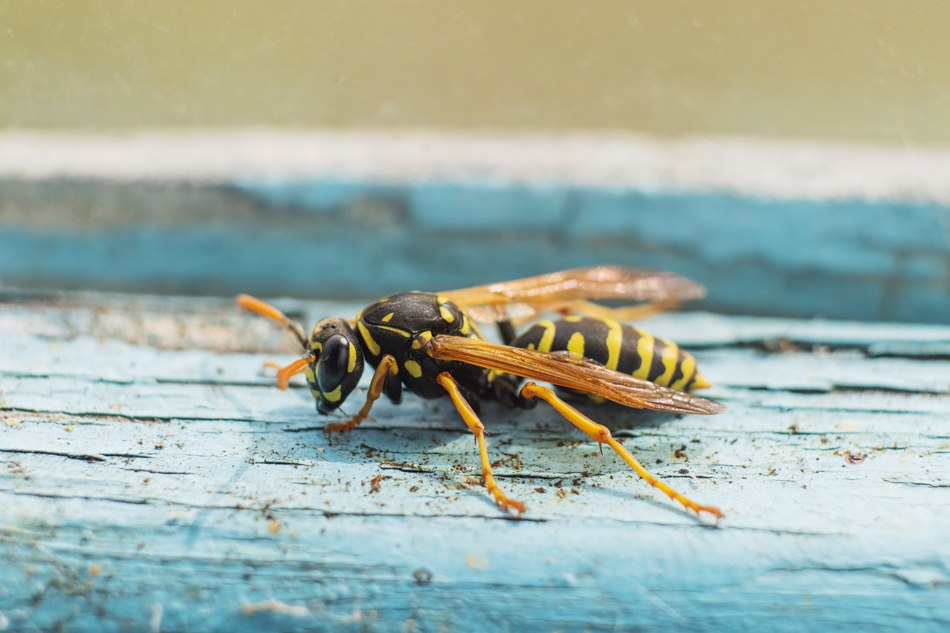
Appearance: Brown with yellow abdominal stripes—often mistaken for a massive yellow jacket, but with a more reddish-brown thorax.
The Nest: Unlike the bald-faced hornet, these prefer hollow spaces. You’ll find them in hollow trees, attic voids, or inside exterior walls.
Behavior: Unique among stinging insects, they are active at night. They are frequently attracted to porch lights, where they may bang against your windows, often called “vining.”
How to Spot the Difference
Is it a Hornet or a Yellow Jacket? Homeowners often confuse the two. Here is the local rule of thumb when dealing with suspected hornets in Virginia:
Yellow Jackets: Small (size of a honeybee), bold yellow/black stripes, and almost always nest underground or in low wall voids.
Hornets: Much larger, robust bodies, and almost always nest above ground in trees or high eaves.
The Hornet Life Cycle in Virginia
Spring (April–May): A single queen emerges from winter hibernation to build a small “starter” nest.
Summer (June–August): The colony grows rapidly. This is when the football-shaped nests become visible across Northern Virginia properties.
Fall (September–October): Aggression peaks. The colony is at its largest, and workers are highly protective of the new queens preparing for winter.
Winter: The colony dies off. Hornets do not reuse old nests, so a nest found in December is almost certainly empty.
Why Do I Have Them? (The Hornet Diet)
Hornets are actually beneficial predators. They eat filth flies, caterpillars, and even other yellow jackets. However, in late summer, their diet shifts to sugars. If you have fruit trees common in Virginia, such as apples or pears, or unsealed trash cans, you may be unintentionally attracting hornets to your property.
Safety Note for Homeowners
Attempting to remove a hornet nest without proper training or protective equipment can result in multiple stings and serious injury. Hornets will aggressively defend their nests if they feel threatened.
Your Next Step: Professional Identification
If you’ve spotted a large nest or giant insects congregating near your home, don’t guess. Mistaking a hornet for a common honeybee can lead to a dangerous situation. Blake’s Pest Control provides expert hornet identification and safe removal throughout Northern Virginia. If you’re dealing with hornets in Virginia, contact us for a professional inspection before the problem escalates.
 Skip to content