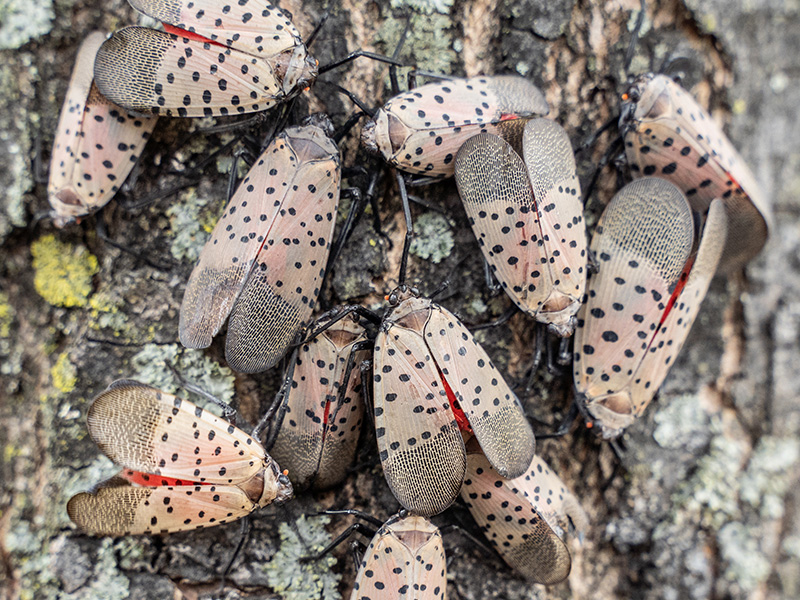
If you’ve noticed a striking, moth-like insect with scarlet underwings and black spots, you’ve likely met the Spotted Lanternfly. Originally found in Winchester in 2018, this invasive planthopper from Asia has officially established itself across Fairfax County, from Reston to Alexandria. Today, the spotted lanternfly Fairfax County population is considered well-established and continuing to expand. Because they lack natural predators in Northern Virginia, their numbers are growing rapidly.
Unlike many pests that are simply a nuisance, the Spotted Lanternfly is a major threat to Virginia’s local economy and ecosystem. They are "planthoppers" that pierce the bark of trees to suck out sap, weakening the plant and making it susceptible to disease. This feeding behavior makes early identification and control critical for Fairfax County homeowners. They feed on over 70 types of plants, including:
Agricultural: Grapes, hops, and stone fruits.
Residential: Red maples, oaks, walnuts, and poplars.
Identification by Life Stage
One reason these pests are hard to control is that they change appearance significantly throughout the year.
May – July (Nymphs): Early-stage nymphs are tiny and black with white spots. As they grow (late June), they develop bright red patches with black and white spots. They are flightless but can jump incredibly fast.
August – November (Adults): Adults are about 1 inch long. When resting, they appear grey with black spots. When they fly, they reveal brilliant red underwings.
September – May (Egg Masses): These look like smears of grey mud. They are often found on flat surfaces like tree trunks, rocks, outdoor furniture, vehicles, and fencing—making spotted lanternfly Fairfax County infestations easy to spread unintentionally.
What to Look For in Your Fairfax Yard
The "Honeydew" Residue: As they feed, they excrete a sticky, sugary substance called honeydew.
Sooty Mold: This honeydew often leads to the growth of Black Sooty Mold. If the base of your trees or your garden stones look like they’ve been covered in chimney soot, you have a major lanternfly presence above you.
The Tree-of-Heaven (Ailanthus altissima): This is their preferred host. It looks like a Sumac tree but has a distinct "burnt peanut butter" smell when the leaves are crushed. Properties with Tree-of-Heaven often become the primary breeding hub for spotted lanternfly Fairfax County populations.
What Should You Do?
Fairfax County officials no longer require reporting in established areas, but the "Stomp it Out" campaign is still in effect.
Mechanical Control: Kill nymphs and adults on sight.
Egg Scraping: Scrape egg masses into a plastic bag with rubbing alcohol or hand sanitizer to kill them.
Avoid Sticky Traps: We strongly advise against using unprotected sticky bands on trees, as they frequently catch and kill beneficial birds and squirrels.
Note: Treatment methods and regulations may vary depending on tree species, proximity to waterways, and local ordinances, which is why professional guidance is often recommended.
Your Next Step: Protect Your Landscape
While lanternflies don't bite humans or pets, they can devastate your ornamental trees and make your outdoor space unusable due to sticky residue and the stinging insects it attracts (wasps love honeydew!).
Blake’s Pest Control offers targeted systemic and contact treatments specifically designed to manage spotted lanternfly Fairfax County infestations while protecting beneficial insects and surrounding plants. We can also help identify and manage Tree-of-Heaven clusters on your property.
Seeing spots? Contact us today to discuss your Spotted Lanternfly mitigation plan and protect your Fairfax County landscape before long-term damage sets in.
 Skip to content